
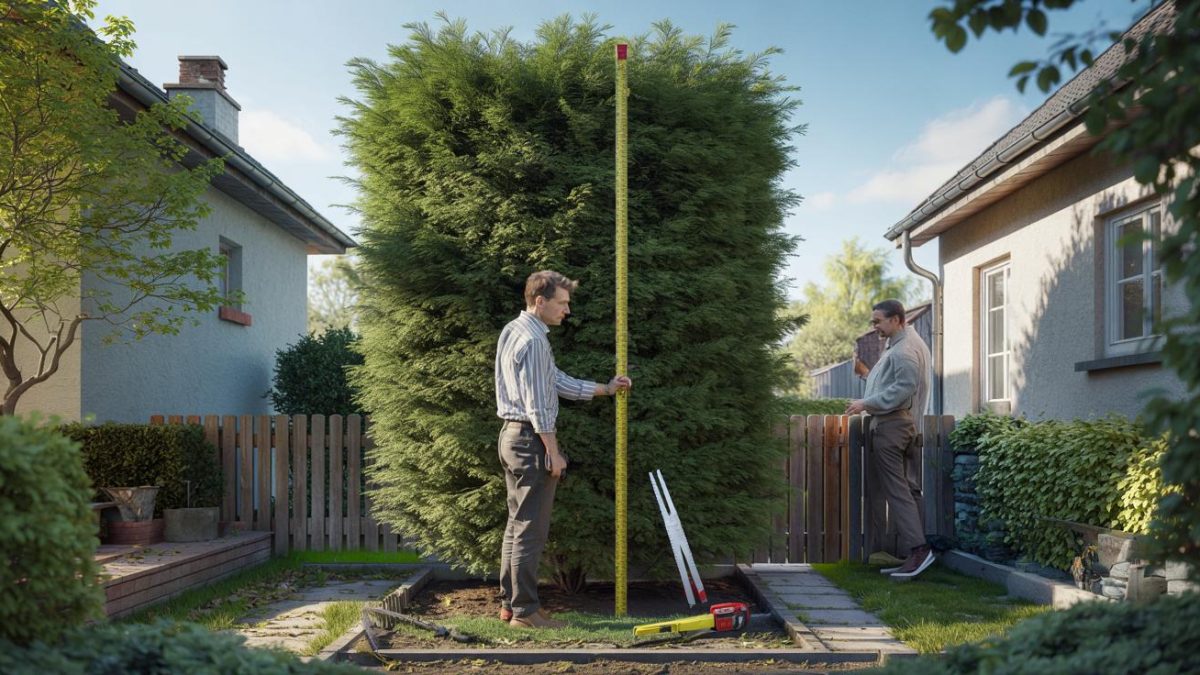

From March 31, hedges exceeding 2 metres in height and located less than 50cm from a neighbour’s property will have to be trimmed or face penalties – that’s the line many Australians are seeing online. It sounds like a hard new rule, but in reality there is no single “March 31 hedge law” that suddenly applies everywhere in Australia. Real hedge laws are state‑based, more nuanced, and focus on the impact of a hedge on neighbours rather than one simple height‑and‑distance formula.
For Google Discover readers, this article takes that viral sentence as a hook, then explains what actually applies in Australia, with a practical focus on New South Wales (NSW). You’ll learn what the law really says, what your responsibilities are as a hedge owner, and how to avoid costly disputes with your neighbours.
Is There Really A March 31 Hedge Law In Australia?
The short answer is no. There is no nationwide law stating that from March 31 every hedge over 2 metres and within 50cm of a boundary must be trimmed or owners will automatically be fined. That sentence is best understood as a simplified or exaggerated way of drawing attention to a genuine issue: overgrown hedges causing neighbour disputes.
Across Australia, tree and hedge rules are set at state and territory level, and sometimes supplemented by local council regulations. These rules usually care about how a hedge affects a neighbour’s property – things like blocking sunlight, views or access – rather than applying a blanket rule based purely on height and distance. Penalties generally arise only after a complaint, an assessment and, often, an order that the owner then fails to follow.
For a solid plain‑English overview of typical tree and hedge disputes in Australia, legal guides by local property and planning law firms are a good reference, as they break down how different states handle these issues in practice.
How Hedge Disputes Actually Work In NSW
The Trees (Disputes Between Neighbours) Act 2006
In New South Wales, hedge and tree conflicts between neighbours are mainly dealt with under the Trees (Disputes Between Neighbours) Act 2006. This law does not introduce a March 31 deadline or a strict 2‑metre limit, but it does give neighbours a formal pathway to deal with hedges that are genuinely causing serious problems.
Under this Act, a hedge is generally understood as a row of at least two or more trees or shrubs that form a screen. The key questions are whether the hedge is high enough and dense enough to severely obstruct sunlight to a window of a dwelling, or to significantly block a view from the neighbour’s property that they previously enjoyed. The focus is on impact rather than on one fixed number.
Role of the NSW Land and Environment Court
If informal discussions and mediation fail, a neighbour in NSW can apply to the NSW Land and Environment Court for orders about a problematic hedge. The Court has the power to order that the hedge be pruned, reduced to a particular height, regularly maintained or, in serious cases, partially removed. It may also make orders about who pays for the work and future maintenance, depending on the history of the dispute.
The Court does not simply fine people on a set date because their hedge went over 2 metres. Instead, it looks at the evidence, the degree of obstruction, the history of communication between neighbours and what an appropriate, fair long‑term solution looks like. For homeowners, that means the real risk arises if you ignore complaints, refuse to address obvious problems and fail to comply with any orders made, rather than from a mythical automatic March 31 trigger.
Where Does “2 Metres And 50cm” Come From?
A catchy simplification of real concerns
The idea that “hedges exceeding 2 metres and located less than 50cm from a neighbour’s property will have to be trimmed or face penalties” packages a few common‑sense risk factors into one memorable sentence. Very tall hedges close to a boundary are exactly the sort that tend to upset neighbours, block light into small suburban yards and set off disputes.
However, Australian legislation usually does not frame the rules in such simple terms. In NSW, height thresholds in case law often revolve around hedges taller than about 2.5 metres, and the law gives weight to whether there is a severe obstruction of sunlight or views rather than just measuring a tape against 2.0 metres. Distance to the boundary is relevant, but again it is the impact that matters, not the distance alone.
Myth versus legal reality
For Google Discover readers, this is where your article can add real value: by clearly distinguishing viral “rules” from actual law. Use the March 31 line as an attention‑grabber, then explain that it is not, in itself, a clause found in Australian legislation. From there, guide readers into the real frameworks that govern hedges in each state and highlight that in NSW it’s the Trees (Disputes Between Neighbours) Act 2006 and related case law that matter.
If you want to support this section with outbound links, linking to a NSW legal information page about tree and hedge disputes, and a short guide written by an Australian property law firm, is an excellent way to give readers trustworthy sources to explore further.
Your Responsibilities As A Hedge Owner In Australia
General duty to be reasonable
Even without a literal March 31 law, hedge owners have ongoing responsibilities. As a homeowner, you’re expected to keep your hedges and trees in a condition that doesn’t unreasonably interfere with your neighbour’s property. That includes making sure large hedges are safe, well‑maintained and not so overgrown that they severely overshadow your neighbour’s living spaces or outdoor areas.
Regular trimming is more than a cosmetic choice. Keeping height and density under control reduces the risk of branches failing in storms, prevents damage to fences and gutters, and helps maintain a balanced degree of privacy on both sides of the fence. A neglected hedge that grows into a dense, towering wall is much more likely to draw complaints and, if you ignore those complaints, legal action.
Responding when a neighbour raises concerns
If your neighbour approaches you about your hedge, try to treat it as an opportunity to fix an issue early rather than as an attack. Listening carefully, inspecting the hedge from their side if possible, and proposing practical steps – such as trimming to a mutually agreed height – often resolves things before councils or courts get involved.
If you dismiss their concerns and refuse to act, you increase the chance that they will seek help from local dispute resolution services, their council or – in NSW – the Land and Environment Court under the Trees Act. Once formal orders are in play, ignoring them can lead to enforcement action and cost consequences, which may be far more expensive than early, cooperative trimming.
What To Do If Your Hedge Is Over 2 Metres Near The Boundary
Step 1: Check your state or territory rules
If your hedge already fits the March 31 description – over 2 metres high and very close to your neighbour’s property – start by checking the official information for your state or territory. In NSW, look up resources that explain the Trees (Disputes Between Neighbours) Act and the Land and Environment Court’s role. In other states, search for government pages on tree and hedge disputes, as terms and processes differ across the country.
Step 2: Assess the impact honestly
Next, take a step back and view your hedge as your neighbour sees it. Ask whether it significantly blocks sunlight into main living areas or popular outdoor spaces, whether it removes a previously enjoyed view, and whether it makes their yard feel closed in or overshadowed. If the answer is yes to any of these, there’s a genuine problem that should be addressed regardless of any viral March 31 claim.
Step 3: Trim proactively and safely
If the hedge is clearly excessive, it’s smart to trim it proactively rather than waiting for a formal complaint. For taller, heavier hedges, engaging a qualified arborist is safer and often more effective in the long term, as they can shape the hedge, reduce height gradually and advise on a sustainable maintenance schedule. Trimming down from well over 2.5 metres to a more neighbour‑friendly height can dramatically reduce the risk of disputes.
Step 4: Communicate and, if needed, seek help
Before and after trimming, communicate with your neighbour. Let them know you’re aware of the issue and that you’re taking steps to fix it. If disagreements remain, community mediation services can help you reach an agreement on future height and maintenance. For complex or high‑value disputes, especially where views or development potential are affected, getting advice from a property or planning lawyer familiar with local tree laws can be very useful.
Can You Be Fined For Not Trimming A Hedge?
While there is no automatic fine that switches on at midnight on March 31 for every tall hedge, there are real consequences for ignoring serious hedge problems and formal orders. In many parts of Australia, authorities can issue orders requiring you to prune or reduce a hedge that is causing a nuisance or breaching local rules. If you fail to comply with such an order, you may face fines, be required to pay for remedial work arranged by the authority, or face cost orders in court proceedings.
The key point is that penalties generally follow a process: complaint, assessment, order, and then non‑compliance with that order. The law is designed to encourage reasonable maintenance and neighbour cooperation, not to punish gardeners by surprise based on a viral date.
For readers who want more detail, you can include outbound links in your article to official state‑level tree and hedge dispute information, as well as to clear legal explainers written by Australian law firms. These links help show that the real story is more detailed than a single sentence – and that informed homeowners can avoid trouble by staying proactive, reasonable and respectful in how they manage their hedges.