
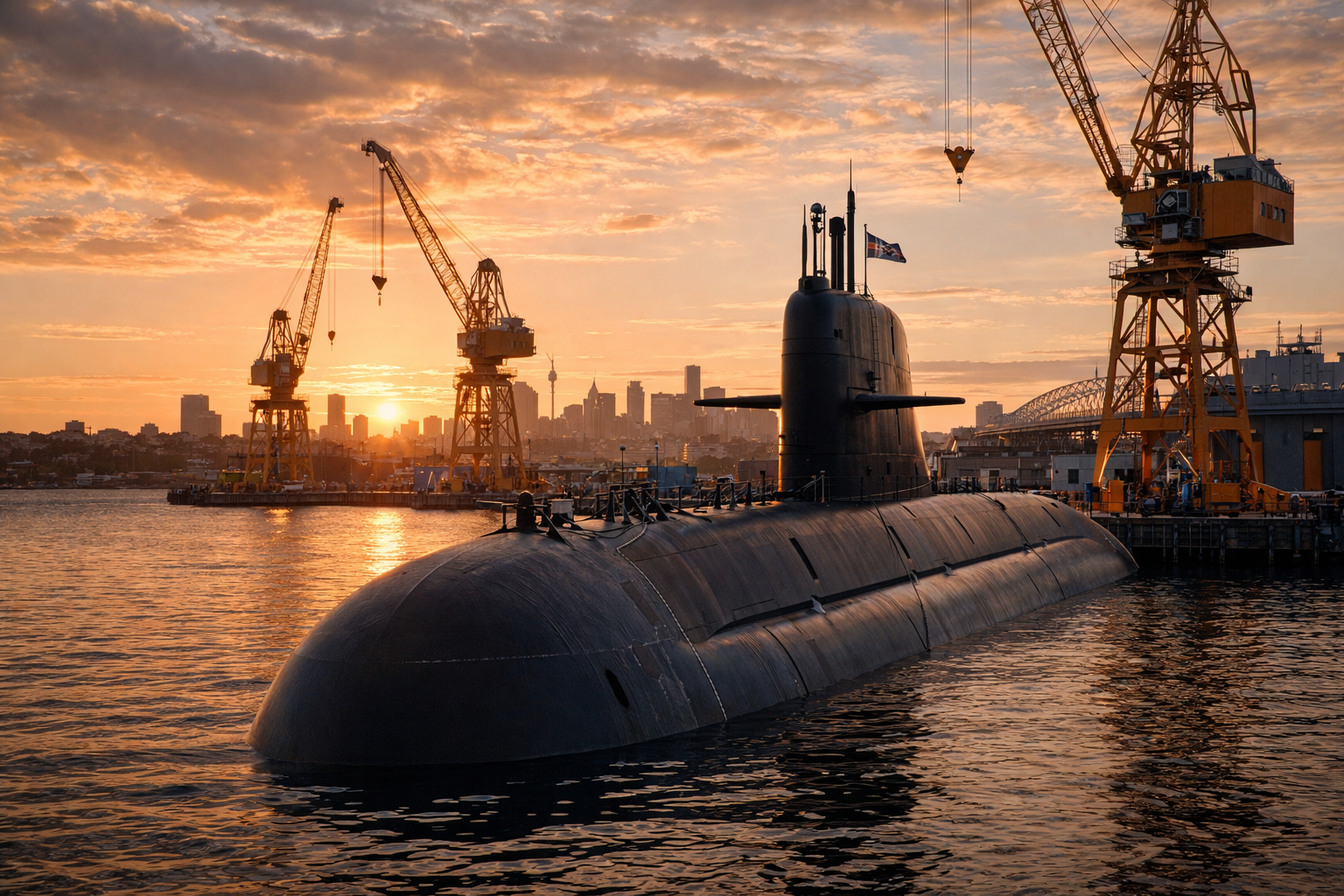

In March 2026, Australia took a significant step in advancing its long-term defence strategy by unlocking initial funding for a nuclear-powered submarine shipyard. The move follows the country’s earlier decision to cancel its high-profile submarine contract with France and instead pursue a new pathway under the AUKUS security partnership.
The funding marks the transition from planning to early-stage development, signalling that Australia’s ambitions to build and maintain nuclear-powered submarines domestically are beginning to take tangible shape.
What Happened
The Australian government has approved the first tranche of funding to support the development of infrastructure required for constructing nuclear-powered submarines. The shipyard, expected to be based in South Australia, will play a central role in the country’s future naval capabilities.
This development comes after the cancellation of the previous diesel submarine deal with France, which had been one of Australia’s largest defence contracts. The shift toward nuclear-powered submarines reflects a broader strategic alignment with key allies under the AUKUS agreement, which includes the United States and the United Kingdom.
Why This Matters
The funding decision is more than just a financial commitment; it represents a major shift in Australia’s defence posture. Nuclear-powered submarines offer greater range, endurance, and stealth compared to conventional alternatives, making them a critical asset in modern naval strategy.
For Australia, this capability enhances its ability to operate across the Indo-Pacific region and respond to evolving security dynamics. It also strengthens defence ties with key allies while positioning the country as a more advanced player in maritime security.
From an economic perspective, the project is expected to generate thousands of jobs and contribute to the development of a highly specialised industrial base.
| Key Point | Detail | Impact |
|---|---|---|
| Country | Australia | Expands regional defence role |
| Project | Nuclear submarine shipyard | Long-term strategic investment |
| Location | South Australia | Economic and industrial growth |
| Timeline | 2026 onwards | Multi-decade development |
What Happens Next
The next phase will involve detailed planning, workforce development, and infrastructure construction. Australia will also continue collaborating with its AUKUS partners to acquire the technical expertise required for nuclear submarine operations.
Over time, the focus will shift toward building the first submarines domestically, while also ensuring that safety, regulatory, and operational standards are met. The project is expected to span decades, with milestones extending well into the 2030s and beyond.
Conclusion
Australia’s decision to unlock funding for a nuclear submarine shipyard marks a defining moment in its defence strategy. Moving away from previous agreements and committing to a new technological path reflects both the complexity and urgency of modern security challenges.
As the project progresses, it will not only reshape Australia’s naval capabilities but also influence its role within the broader geopolitical landscape of the Indo-Pacific.
Disclaimer
This article is based on publicly available information and official announcements at the time of writing. Defence projects and timelines may evolve as policies, agreements, and technical requirements develop.