
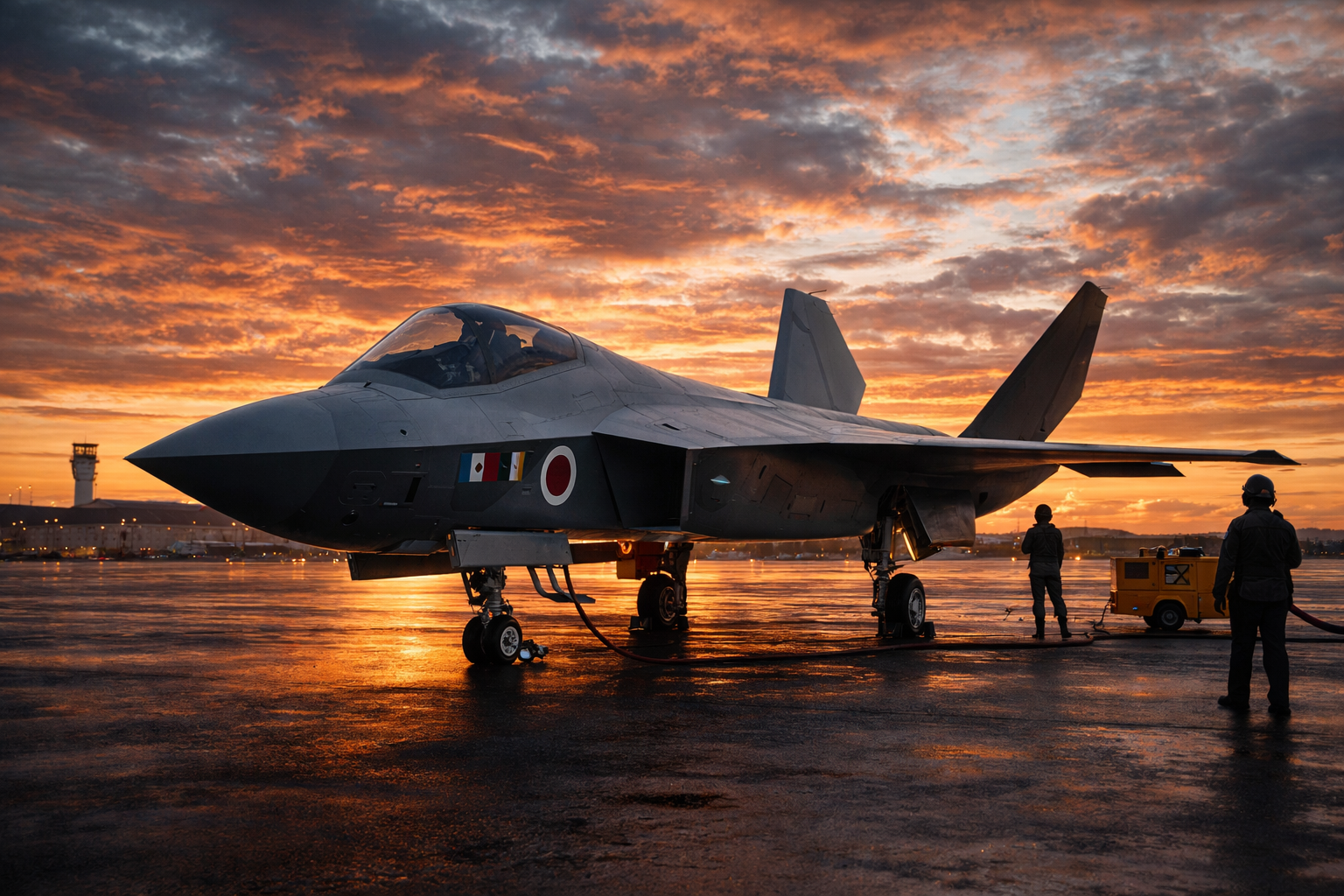

A major international defence project involving Italy, Japan, and the United Kingdom is drawing increased scrutiny after projected costs for its next-generation fighter jet reportedly surged well beyond initial estimates. The programme, often associated with the Global Combat Air Programme (GCAP), aims to deliver a sixth-generation aircraft capable of operating in highly complex and data-driven combat environments.
As development accelerates in 2026, the rising costs are highlighting the challenges of building one of the most advanced military aircraft ever attempted.
What Happened
The joint initiative brings together defence manufacturers and governments from the three countries to design and produce a next-generation fighter jet expected to enter service in the mid-2030s. The aircraft is intended to replace existing fleets such as the Eurofighter Typhoon and Japan’s ageing fighter platforms.
However, recent reports suggest that projected costs have increased significantly compared to earlier expectations. The escalation is largely attributed to expanding technological ambitions, including advanced stealth capabilities, artificial intelligence integration, drone collaboration systems, and next-generation sensors.
Complex international coordination, supply chain pressures, and evolving security requirements have also contributed to the upward revision in budget estimates.
Why This Matters
The increase in projected costs reflects a broader trend in modern defence programmes, where cutting-edge technology comes with escalating financial demands. Sixth-generation fighter jets are expected to operate not just as standalone aircraft, but as part of a wider network of autonomous systems, data platforms, and multi-domain operations.
For participating countries, the programme represents both a strategic investment and a financial commitment that will span decades. It also underscores the importance of collaboration in managing development risks, sharing expertise, and maintaining competitiveness against other global defence initiatives.
At the same time, cost overruns raise questions about long-term affordability and whether all partners will maintain the same level of commitment as the project progresses.
| Key Point | Detail | Impact |
|---|---|---|
| Programme | Next-generation fighter jet (GCAP) | Sixth-generation capability development |
| Countries | Italy, Japan, United Kingdom | International collaboration |
| Issue | Cost escalation | Budget and planning pressure |
| Timeline | Target mid-2030s | Long-term strategic project |
What Happens Next

The programme is expected to continue moving forward despite rising costs, with further design refinements, testing phases, and industrial coordination underway. Governments will likely reassess budgets and timelines to ensure the project remains viable while meeting evolving defence needs.
Future decisions may include adjusting specifications, increasing funding commitments, or expanding partnerships to distribute costs more effectively. The coming years will be critical in determining whether the programme can balance technological ambition with financial sustainability.
Conclusion
The sharp increase in projected costs for the next-generation fighter jet programme highlights the complexity of modern defence innovation. While the ambition to develop a sixth-generation aircraft reflects the evolving nature of global security, it also brings significant financial and logistical challenges.
As the project progresses, it will serve as a key example of how nations navigate the balance between technological advancement and economic reality in large-scale defence initiatives.