
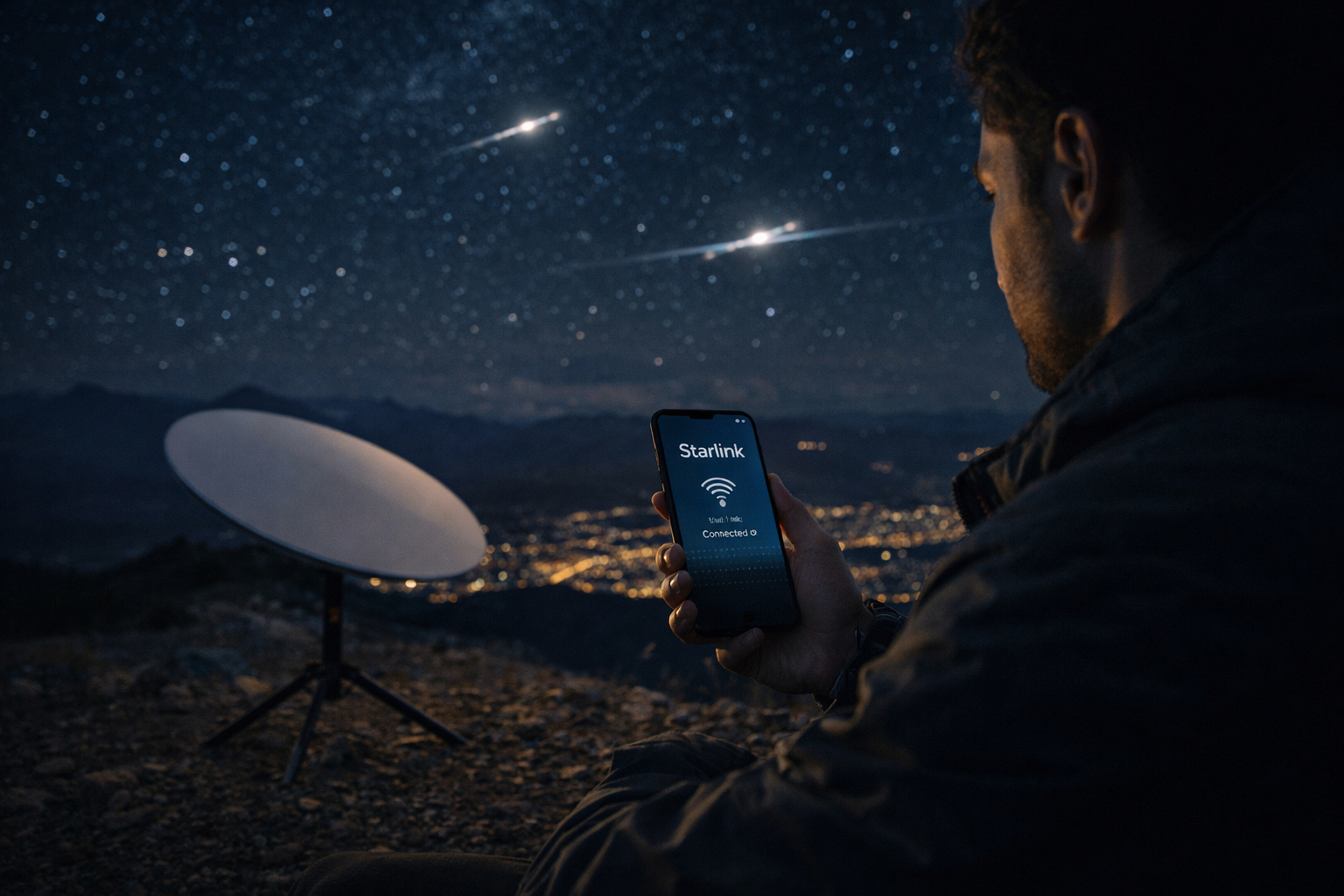

In 2026, satellite internet is entering a new phase as Starlink, a service operated by SpaceX, expands capabilities that allow mobile connectivity without traditional installation or specialised hardware. The development marks a shift from fixed satellite dishes toward more flexible, device-compatible solutions that could change how people access the internet, particularly in remote and underserved areas.
The update has gained attention because it moves closer to seamless global connectivity, where users can access high-speed internet directly from existing mobile devices.
What Is Changing

Traditionally, satellite internet required a physical dish and dedicated setup to receive signals from orbiting satellites. However, new developments in direct-to-device technology are enabling compatible mobile phones to connect to satellites without additional hardware.
This means users in certain regions may soon be able to send messages, access basic internet services, and maintain connectivity even in areas without traditional network coverage. The technology relies on a growing constellation of low Earth orbit satellites designed to reduce latency and improve performance compared to earlier satellite systems.
Why This Matters
The implications of this shift are significant. Expanding satellite connectivity to mobile devices could help bridge gaps in coverage, particularly in rural or remote regions where infrastructure is limited or costly to deploy.
For industries such as emergency services, logistics, and travel, reliable connectivity in remote locations can improve safety and operational efficiency. It also opens new opportunities for communication during natural disasters or network outages, where traditional infrastructure may be compromised.
From a broader perspective, this development reflects the ongoing convergence of telecommunications and space technology, with companies racing to provide more accessible and resilient global networks.
| Aspect | Detail | Impact |
|---|---|---|
| Technology | Direct-to-device satellite connectivity | Removes need for hardware installation |
| Provider | Starlink (SpaceX) | Expanding global network |
| Use Case | Remote and mobile connectivity | Improved accessibility |
| Timeline | Expanding through 2026 | Gradual rollout |
What Happens Next
The rollout of direct-to-device satellite services is expected to continue throughout 2026 and beyond, with gradual expansion across regions and carriers. Partnerships with mobile network providers will likely play a key role in enabling compatibility and scaling the service.
As the technology matures, capabilities may extend beyond messaging to include broader internet access, although bandwidth and performance limitations will remain an area of development.
Competition in this space is also expected to intensify, with other companies exploring similar solutions to provide global connectivity.
Conclusion
The expansion of mobile satellite internet without the need for installation represents a meaningful step toward more accessible global connectivity. While still evolving, the technology has the potential to reshape how and where people stay connected, particularly in areas beyond the reach of traditional networks.
As adoption grows, it may become an increasingly important part of the global communication landscape.
Disclaimer
This article is based on currently available information and technology developments. Availability and performance may vary depending on region, device compatibility, and network partnerships.