
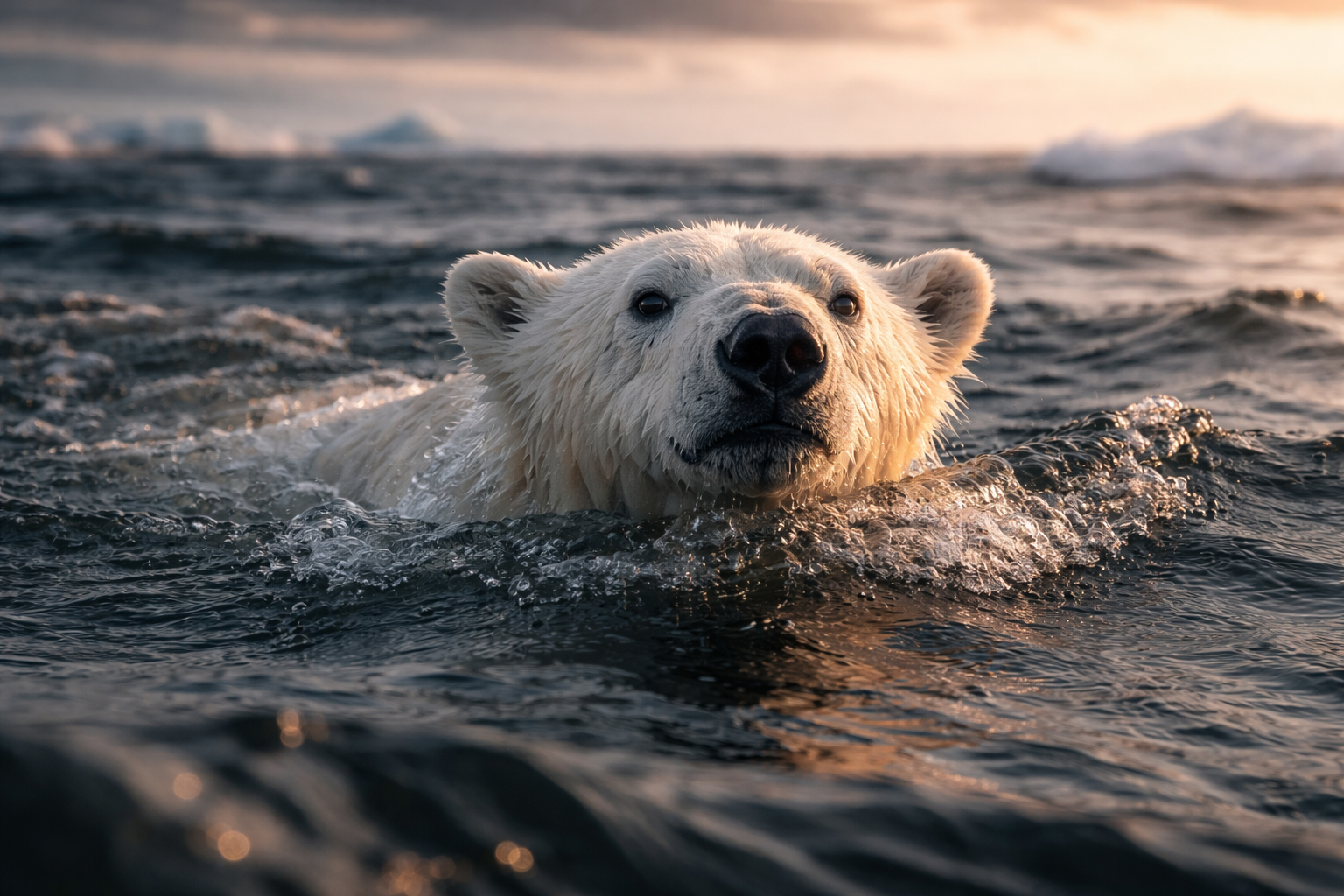

Wildlife researchers have reported an extraordinary event in early 2026 after tracking data revealed that a young Polar bear swam an unusually long distance across open sea ice. The observation, recorded through a GPS tracking collar, has drawn significant attention from scientists studying Arctic ecosystems and animal behaviour.
The journey is being described as both remarkable and concerning, highlighting the increasing challenges wildlife faces in rapidly changing environments.
What Was Observed

The young bear was fitted with a GPS tracking collar as part of an ongoing research project monitoring Arctic wildlife movement. Over a short period, the data showed the animal covering a vast stretch of open water, far beyond what is typically expected for a bear of its age.
Polar bears are strong swimmers, capable of travelling long distances when necessary. However, such extended journeys are usually associated with adult bears and often occur under extreme conditions, such as the search for food or stable sea ice.
In this case, researchers believe the movement was likely driven by a lack of accessible ice platforms, forcing the animal to swim longer distances than usual.
Why This Matters

This observation provides valuable insight into how wildlife is adapting to shifting environmental conditions. The Arctic region has been experiencing changes in sea ice patterns, which play a critical role in the survival of polar bears. Sea ice serves as a platform for hunting, resting, and raising young.
When ice becomes less stable or more fragmented, animals are required to travel greater distances, increasing physical strain and energy expenditure. For younger bears, this can be particularly challenging, as they have less experience and lower energy reserves compared to adults.
The event highlights the delicate balance within Arctic ecosystems and the potential long-term impact of environmental changes on species that depend heavily on specific habitats.
| Key Point | Detail | Significance |
|---|---|---|
| Species | Polar bear | Arctic apex predator |
| Behaviour | Long-distance swim | Unusual for young bear |
| Tracking Method | GPS collar | High-accuracy monitoring |
| Context | Reduced sea ice availability | Environmental pressure |
What Comes Next

Researchers will continue to monitor similar tracking data to determine whether such behaviour is becoming more common. If repeated patterns emerge, it could indicate broader shifts in migration and survival strategies among polar bears.
Further studies may also focus on how these changes affect population health, reproduction, and long-term sustainability. Conservation strategies could evolve in response to new findings, particularly in regions where environmental changes are most pronounced.
Conclusion
The journey of this young polar bear offers a rare and powerful insight into the realities of life in the Arctic. While the animal’s endurance is remarkable, the circumstances behind such behaviour raise important questions about the future of its habitat.
As scientists gather more data, events like this will play a key role in understanding how wildlife adapts to an environment that is changing faster than ever before.
Disclaimer
This article is based on wildlife observations and research data available at the time of writing. Interpretations may evolve as further studies are conducted.