
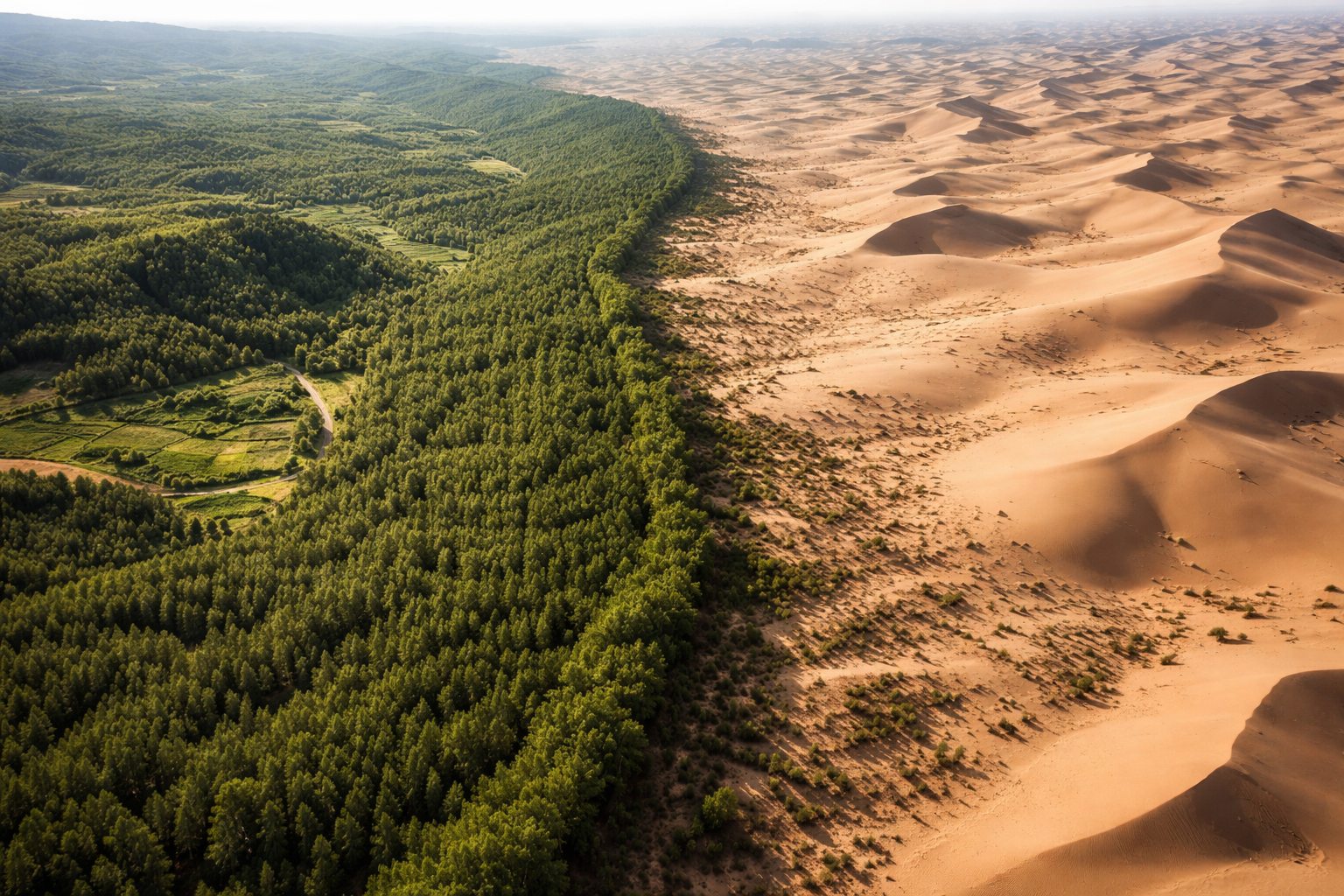

New satellite observations have provided fresh insight into one of the world’s largest environmental projects, with scientists reporting measurable changes linked to China’s “Great Green Wall.” Data analysed with support from NASA indicates that large-scale tree planting efforts are contributing to a slowdown in desert expansion across parts of northern China.
The findings are being closely examined by environmental researchers, as the project represents one of the most ambitious attempts to combat land degradation on a continental scale.
What the Data Shows
The Great Green Wall initiative, launched decades ago, aims to reduce the spread of desert landscapes by planting billions of trees and restoring degraded land. Satellite imagery over recent years has revealed noticeable increases in vegetation cover in targeted regions, particularly along the edges of desert zones.
Researchers analysing the data have identified areas where the expansion of desert terrain has slowed, suggesting that reforestation efforts are having a measurable effect. In some regions, vegetation growth has also contributed to improved soil stability and reduced wind erosion.
However, the scale and consistency of these improvements vary depending on location, climate conditions, and the types of vegetation used.
Why This Matters

Desertification poses a major challenge for many regions around the world, affecting agriculture, water resources, and long-term environmental stability. Efforts to slow or reverse land degradation are critical for maintaining ecosystems and supporting local communities.
China’s project is often cited as a large-scale example of human intervention aimed at addressing environmental challenges. If effective over the long term, it could offer a model for similar initiatives in other parts of the world.
At the same time, the project has sparked debate among experts. Some researchers argue that while tree planting can provide short-term benefits, long-term success depends on factors such as biodiversity, water availability, and ecosystem balance.
| Key Point | Detail | Significance |
|---|---|---|
| Project | Great Green Wall (China) | Large-scale reforestation effort |
| Method | Satellite observation | Independent environmental tracking |
| Outcome | Increased vegetation cover | Slowing desert expansion |
| Debate | Long-term sustainability | Ongoing scientific discussion |
What Comes Next

Scientists are expected to continue monitoring the region using satellite data and field research to assess long-term outcomes. Future studies will likely focus on the durability of newly established vegetation and its impact on local ecosystems.
There is also growing interest in combining reforestation with other land management strategies, such as soil restoration and sustainable agriculture, to improve overall effectiveness.
As climate pressures increase globally, large-scale environmental projects like this will remain under close scrutiny.
Conclusion
The latest satellite observations suggest that China’s Great Green Wall is having a measurable impact on desert expansion, marking a significant development in global environmental efforts. However, the long-term success of the project remains a subject of ongoing research and debate.
As more data becomes available, the project will continue to shape discussions around how best to address land degradation and climate-related challenges on a global scale.
Disclaimer
This article is based on satellite data and scientific analysis available at the time of writing. Environmental outcomes may vary over time and are subject to ongoing research and interpretation.