
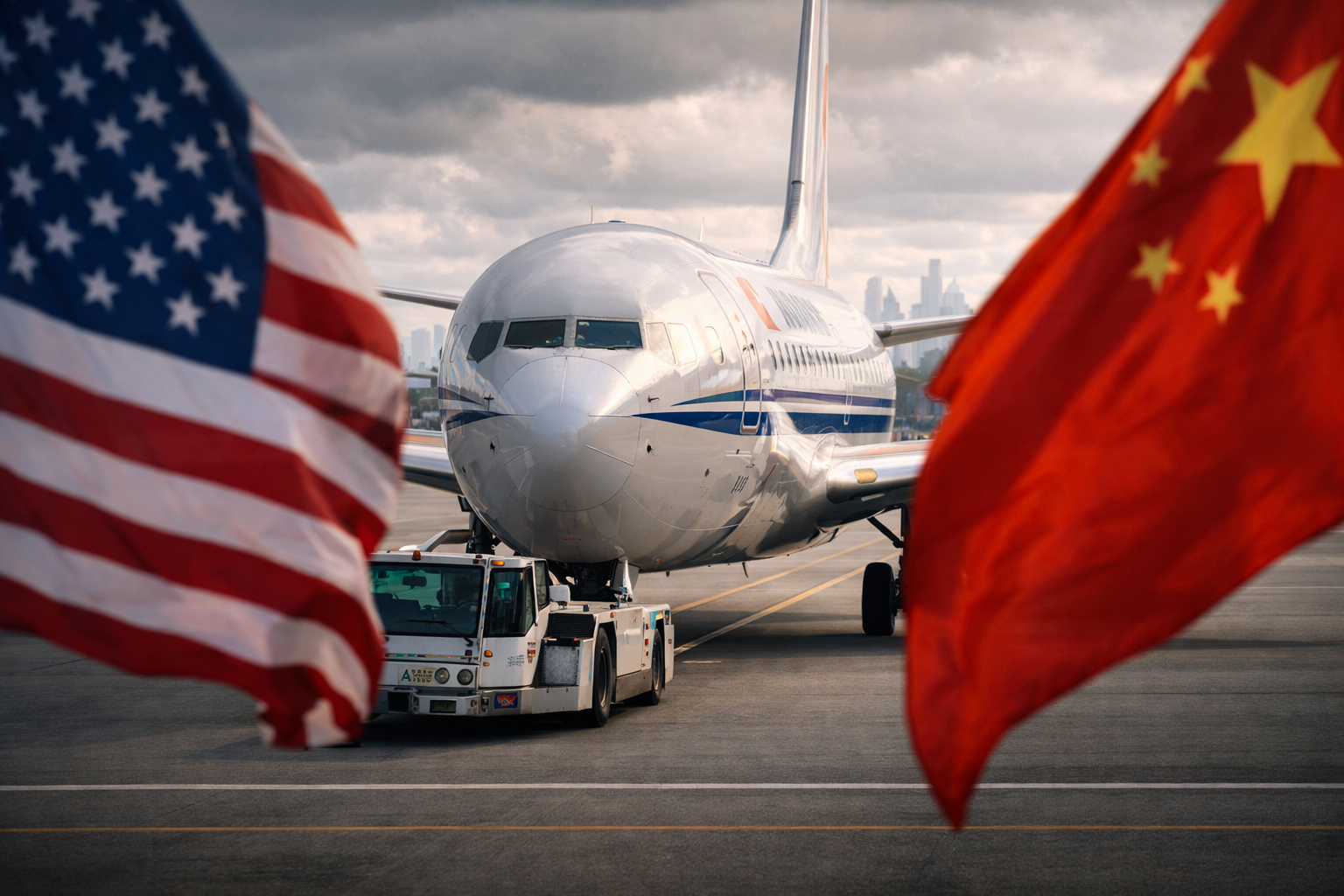

A new development in early 2026 has brought renewed attention to the fragile relationship between China and the United States in the aviation sector. Reports indicate that China has begun returning certain Boeing aircraft to the US, raising concerns over unresolved delivery issues, regulatory disputes, and growing uncertainty between the two global powers. The move is being closely watched by industry analysts, as it signals deeper challenges beyond standard commercial disagreements.
What Happened
The situation stems from a combination of delayed aircraft deliveries, certification issues, and broader geopolitical tensions that have affected the aviation industry over the past few years. Boeing, one of the world’s largest aircraft manufacturers, has faced ongoing challenges delivering planes to Chinese carriers, partly due to regulatory approvals and shifting diplomatic relations.

In recent developments, aircraft that were previously expected to be delivered to Chinese airlines are now reportedly being sent back or withheld. While exact numbers remain unclear, the decision reflects increasing friction between stakeholders and a lack of alignment on timelines and responsibilities.
Why This Matters
The return of aircraft is not just a logistical issue — it has wider implications for global trade, aviation markets, and supply chain stability. China represents one of the largest aviation markets in the world, and disruptions in this relationship can significantly impact aircraft manufacturers, airlines, and related industries.
For Boeing, delays and returned aircraft can affect revenue forecasts, production planning, and investor confidence. For China, the situation highlights ongoing efforts to reduce reliance on foreign manufacturers and strengthen domestic aviation capabilities.

More broadly, the development reflects how geopolitical tensions can directly influence commercial industries, particularly those as interconnected as global aviation.
| Key Point | Detail | Impact |
|---|---|---|
| Industry | Aviation | Global supply chain sensitivity |
| Companies | Boeing, Chinese airlines | Major stakeholders affected |
| Issue | Aircraft returns and delivery delays | Financial and operational disruption |
| Timeline | Early 2026 | Ongoing situation |
What Happens Next
Looking ahead, the situation may evolve in several ways. Negotiations between Boeing and Chinese regulators could resume, potentially resolving certification or delivery concerns. At the same time, China may accelerate efforts to expand its domestic aircraft manufacturing programs, reducing long-term dependence on foreign suppliers.
Industry observers will also be watching how this affects Boeing’s global order book and whether other markets step in to absorb the returned aircraft. The outcome will likely depend on both regulatory alignment and broader diplomatic relations between the two countries.
Conclusion

The return of Boeing aircraft by China highlights the growing intersection between geopolitics and global commerce. While aviation has traditionally operated across borders with relative stability, recent developments show that even long-established partnerships can be reshaped by external pressures.
As the situation unfolds, it will serve as a key indicator of how resilient global supply chains are in an increasingly complex political and economic environment.